Ingestion Layer
Learn how to connect to data sources and ingest multimodal content for RAG systems.
Ingestion Layer
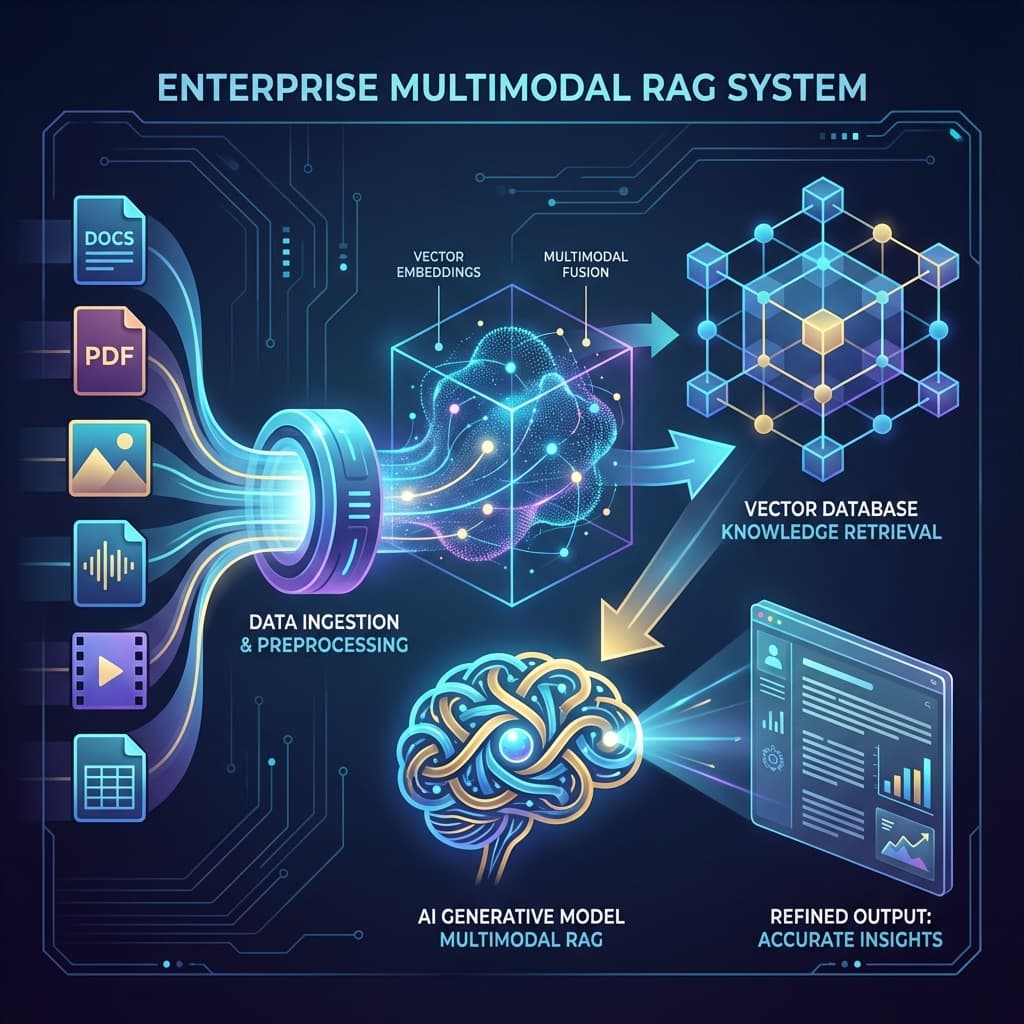
The ingestion layer connects your RAG system to data sources and handles the initial data collection.
Key Responsibilities
graph LR
    A[Data Sources] --> B[Ingestion Layer]
    B --> C[File System Monitor]
    B --> D[API Connectors]
    B --> E[Cloud Storage Sync]
    B --> F[Database Queries]

    C & D & E & F --> G[Preprocessing Queue]
Ingestion Patterns
Batch Ingestion
- Process large volumes at once
- Scheduled runs (daily, weekly)
- Initial system setup
Streaming Ingestion
- Real-time document processing
- File system watchers
- Event-driven updates
Incremental Updates
- Only process changed files
- Track versions
- Minimize reprocessing
Implementation
# Conceptual ingestion pipeline
class IngestionPipeline:
    def ingest_from_s3(self, bucket, prefix):
        files = s3.list_objects(bucket, prefix)
        for file in files:
            if not already_indexed(file):
                content = s3.download(file)
                yield {
                    'content': content,
                    'metadata': extract_metadata(file),
                    'source': f's3://{bucket}/{file.key}'
                }
Data Source Connectors
Common integrations:
- S3/Cloud Storage
- SharePoint/Google Drive
- Databases (PostgreSQL, MongoDB)
- APIs (REST, GraphQL)
- File systems
- Email (IMAP)
- Slack/Teams
Next lesson covers preprocessing.