ChatGPT’s Finance Connector Turns Trust Into the Product
OpenAI’s ChatGPT personal finance preview uses Plaid account connections, raising a sharper trust test for consumer AI.

Stop overpaying. Our autonomous agents scan the web to find the lowest prices and exclusive discounts in seconds.





OpenAI’s ChatGPT personal finance preview uses Plaid account connections, raising a sharper trust test for consumer AI.
Airbus and Mistral AI are partnering on sovereign aerospace AI across commercial, defense, helicopter, and space operations.
Microsoft’s NLWeb project is becoming a practical test for whether websites need agent-ready conversational interfaces.
Enterprise leaders are pushing for cheaper AI tokens as model choice becomes a procurement and margin discipline.
Groq is reportedly raising 650 million dollars as AI infrastructure shifts from training chips to inference clouds.

Mistral’s AI Now Summit sharpened the debate over European AI, on-prem deployment, small models, and industrial use cases.

Gemini-powered Siri rumors and Gemini 3.5 Flash chatter show why Apple’s AI problem is about routing, privacy, and trust.

OpenAI’s Rosalind Biodefense program highlights the tension between defensive acceleration and dual-use biology risk.

Anthropic’s $65B Series H and $965B valuation sparked a debate about AI revenue, compute demand, and enterprise ROI.
Cisco's 2026 WAN report frames agentic AI and inference traffic as a long-term networking design problem.
Agentic AI is forcing companies to redesign identity, access control, monitoring, and governance around non-human users.
A new arXiv comparison of Claude Code and Codex on Einstein Telescope data points to more realistic agent evaluation.
OpenAI is retiring o3 and GPT-4.5 in ChatGPT, forcing teams to treat model access as a managed dependency.
Nvidia's Cosmos 3 pushes open world models toward robotics, autonomous vehicles, and physical AI infrastructure.
Product Hunt’s May 31 leaderboard points to user demand for local search, persistent AI memory, and research capture workflows.
The debate over vibe coding, Claude Code, Cursor, and AI-assisted development is becoming a fight about ownership.
Google’s Gemini Spark signal points toward agentic assistants that live inside email and daily workflows.
OpenAI’s Codex expansion into ChatGPT mobile changes the approval loop for remote software agents.
Anthropic’s reported valuation lead over OpenAI is now a proxy fight about AI margins, chips, and founder wealth.
OpenAI’s ChatGPT personal finance preview uses Plaid account connections, raising a sharper trust test for consumer AI.
Airbus and Mistral AI are partnering on sovereign aerospace AI across commercial, defense, helicopter, and space operations.
Groq is reportedly raising 650 million dollars as AI infrastructure shifts from training chips to inference clouds.
Mistral’s AI Now Summit sharpened the debate over European AI, on-prem deployment, small models, and industrial use cases.
Gemini-powered Siri rumors and Gemini 3.5 Flash chatter show why Apple’s AI problem is about routing, privacy, and trust.
OpenAI’s Rosalind Biodefense program highlights the tension between defensive acceleration and dual-use biology risk.
Anthropic’s $65B Series H and $965B valuation sparked a debate about AI revenue, compute demand, and enterprise ROI.

Claude Opus 4.8 triggered a large Hacker News debate about whether frontier model gains are real or just harder to perceive.

Andrej Karpathy joining Anthropic highlights a shift from bigger runs alone toward AI-assisted pretraining research.

Zero Shot shows how former OpenAI builders are turning insider model knowledge into early-stage AI investing.

Rocket 1.0 argues that the next AI software fight is deciding what to build before vibe coding begins.

Google AI Edge Eloquent quietly turns on-device Gemma speech models into a privacy-first dictation wedge.

Workday and Google Cloud are making HR and finance agents a governance story, not just a model capability story.

ByteDance is reportedly developing Arm and RISC-V CPUs for AI infrastructure as chip shortages push hyperscale buyers toward custom silicon.

Cognition raised more than $1 billion as Devin turns autonomous software work into a measurable enterprise budget line.

Illinois advanced a frontier AI safety bill requiring public plans and independent audits, turning state law into an AI governance test bed.

Meta is rolling out app subscriptions and testing Meta AI paid plans, turning consumer AI compute into a social platform product.

Robinhood opened dedicated accounts and cards to AI agents, making financial autonomy the next major test for agent safety.

Anthropic raised $65 billion at a $965 billion valuation, turning Claude demand, compute access, and AI safety into one capital story.

Leaked Siri app plans suggest Apple may blend Gemini-powered AI search, local models, and iOS distribution into a ChatGPT rival.

Asana acquired StackAI for $75 million, signaling that workplace platforms want to own the human-agent operating layer.

Anthropic released Claude Opus 4.8 with Dynamic Workflows, pushing large codebase migrations and parallel subagents into focus.

XCENA raised $135 million as investors focus on memory bandwidth, not only compute, as the next constraint for AI inference.
OpenBMB's MiniCPM5-1B brings 1B-class open-weight performance, hybrid reasoning and long context to local, edge and low-cost agent workflows.
Windows 365 for Agents and Microsoft Agent 365 point to a new enterprise pattern: governed agents running inside auditable Cloud PCs.
AWS made Amazon Nova Act HIPAA eligible, opening browser-based healthcare automation for claims, referrals and prior authorization workflows.
Cohere released Command A+ as an Apache 2.0 MoE model for enterprise reasoning, multilingual RAG, tool use and private deployment.
OpenAI's May 2026 election plan adds AP results, Democracy Works voting info, cyber defense support, SynthID and C2PA provenance.
A factual Google I/O 2026 guide covering Gemini 3.5, Omni, Search agents, Spark, Antigravity, AI Studio, Workspace, Flow, Science and XR.
Copilot Studio computer-using agents becoming generally available shows enterprise automation is shifting from APIs to governed screen work.
A new Brookings policy brief argues that companion bots need public-health style oversight as emotional AI moves into daily life.
OpenAI's Gartner recognition for Codex signals that enterprise coding agents are becoming a governed software buying category.
Google DeepMind's Project Genie expansion shows why interactive world models may become infrastructure for robotics, maps, and agent training.
Demis Hassabis framed agents as a rehearsal for AGI, sharpening the debate over autonomy, safety, and enterprise readiness.
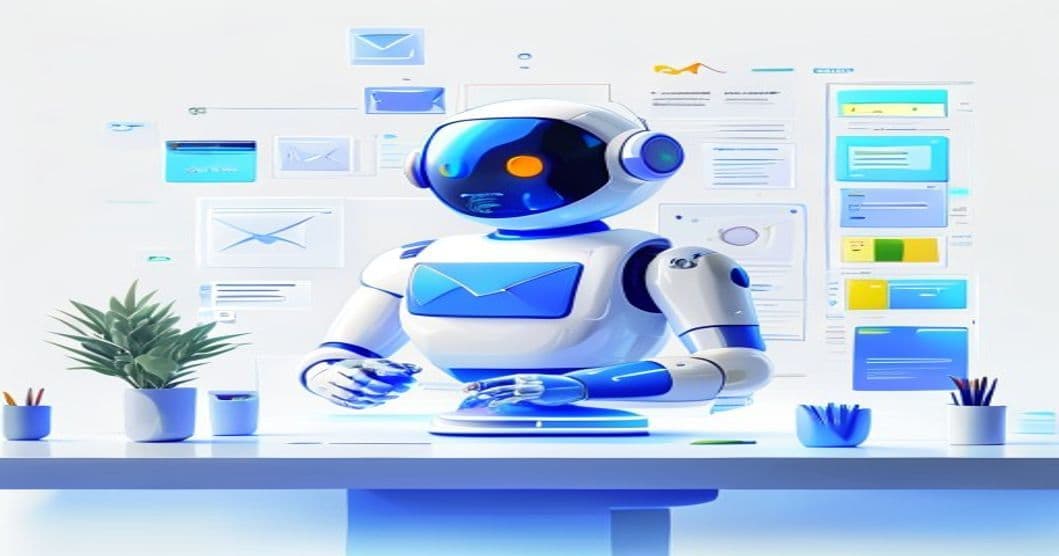
Google’s Gemini Spark reframes personal AI as an always-on agent that connects Gmail, Calendar, Drive, Docs, Sheets, Slides, YouTube, Maps, and Chrome.
Dell Deskside Agentic AI pairs workstations, NVIDIA NemoClaw, and OpenShell to run governed agents near enterprise data.
Gemini for Science packages hypothesis generation, computational discovery, and paper triage into agentic tools for researchers.

Google's Daily Brief turns Gemini into a proactive overnight agent that reads connected apps and prepares the day ahead.