Fully Managed Cloud RAG with Bedrock
Master Amazon Bedrock's 'Knowledge Bases' to build production RAG systems without managing servers or database clusters.
Fully Managed Cloud RAG with Bedrock
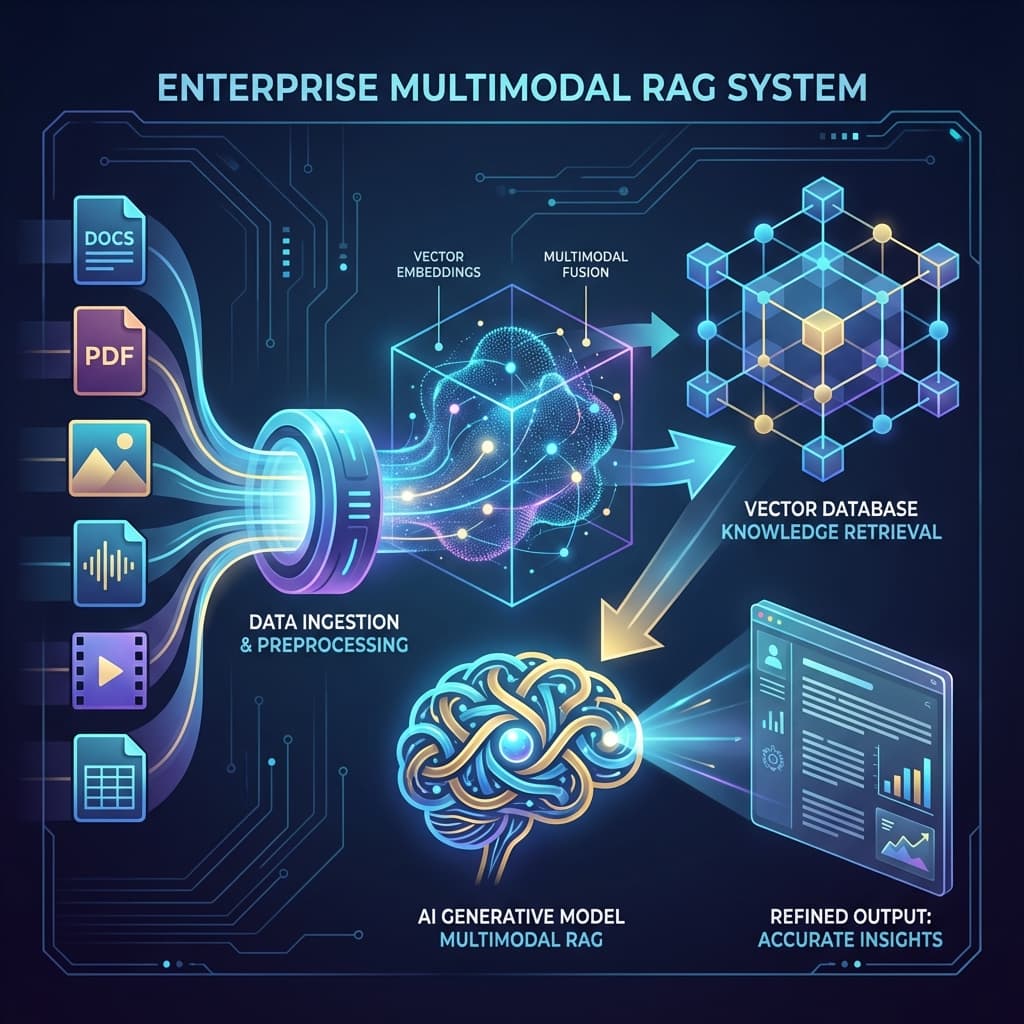
Building a production RAG system involves managing ingestion jobs, vector databases, and LLM APIs. AWS Bedrock Knowledge Bases automates this entire lifecycle.
How Knowledge Bases Work
- Data Source: An S3 bucket where you upload your documents.
- Embedding Model: Choose Titan or Cohere (Managed by Bedrock).
- Vector Store: Bedrock automatically manages an OpenSearch Serverless, Pinecone, or Aurora index for you.
- Retrieve and Generate API: A single API call that takes the user query and returns a fully cited answer.
Implementation with Boto3
import boto3

client = boto3.client('bedrock-agent-runtime')

response = client.retrieve_and_generate(
    input={
        'text': 'What is the company policy on remote work?'
    },
    retrieveAndGenerateConfiguration={
        'type': 'KNOWLEDGE_BASE',
        'knowledgeBaseConfiguration': {
            'knowledgeBaseId': 'YOUR_KB_ID',
            'modelArn': 'arn:aws:bedrock:us-east-1::foundation-model/anthropic.claude-3-sonnet-20240229-v1:0'
        }
    }
)

print(response['output']['text'])
Scaling and Management
Because it's "Serverless," it scales automatically.
- Auto-Sync: When you add a file to S3, you can trigger a "Sync" job to update your vector index.
- Monitoring: Integration with CloudWatch for search latency and token usage.
When to Use Bedrock Knowledge Bases
- When you are already on AWS.
- When you want to minimize "DevOps" and management overhead.
- When you need a system that can be deployed in minutes.
Pricing Considerations
You pay for:
- Model usage (Inference).
- OpenSearch Serverless (Storage/Compute).
- Bedrock service fees.
Exercises
- Create a Knowledge Base in the AWS Console.
- Upload 3 files to S3 and trigger a sync.
- How long does the "Ingestion" take for 100 pages of text?