The Line Between Smart Technology and Overreach
We define the 'Boundary of the Self' in an age of sentient environments. Discover how to differentiate between technology that serves you and technology that dominates you, and why maintaining the 'Analog Citadel' is the key to 21st-century freedom.
The Invisible Threshold: Navigating the Shimmering Line of Technological Intent
We live in an age where the objects around us are "Waking Up."
For most of human history, a chair was just a chair, a wall was just a wall, and a door was just a door. They were passive, physical guardians of our space. But today, these objects are becoming Sentient. Through the magic of the Internet of Things (IoT) and AI, our environments are beginning to see, hear, and even "feel" our presence.
This "Quickening" of the material world promises a level of comfort and efficiency that our ancestors could only dream of. But as the "Smart" layer of our lives deepens, we are stumbling upon a new and dangerous frontier: The Overreach.
The line between "Smart Technology" (which empowers us) and "Technological Overreach" (which monitors and controls us) is not a thick, black line. It is a shimmering, invisible threshold that is often crossed in the pursuit of a frictionless life.
As a visionary narrative storyteller, I want to take you to the edge of this line. We are going to explore the three "Signals of Overreach," the concept of the "Sentient Cage," and how to reclaim your sovereignty in a world of whispering walls.
The Three Signals of Technological Overreach
How do you know when a "Smart" feature has become an "Overreaching" gaze? You must look for the Mismatch of Intent.
1. The Data-Utility Gap
A "Smart Scale" that tells you your weight is helpful. A "Smart Scale" that refuses to show you your weight unless you create a cloud account and give it permission to share your data with "Selected Partners" is overreaching.
When the amount of data a device requires is vastly disproportionate to the service it provides, the device’s true purpose is not "Service"; it is Extraction. The "Smart" feature is merely the lure on a hook of surveillance.
2. The Loss of the "Manual Path"
Technology overreaches when it eliminates your Agency.
If a smart light system is "so smart" that it no longer has a physical switch—or if that switch becomes a "Software Trigger" that fails when your internet goes down—the technology has transitioned from being a tool to being a Master. Overreach is the removal of the "Analog Override." It is the moment when you can no longer navigate your own life without the machine's permission.
3. The "Unasked Prediction"
There is a profound difference between a device that does what you ask and a device that Tells you what you need.
When your phone alerts you that you should "Leave now for work" based on your traffic patterns, it feels like magic. But when your refrigerator suggests you shouldn't buy more butter because your "Health Score" is low, that is overreach. It is the machine moving from "Assistant" to "Governor." It is an intrusion into the "Sacred Space" of human decision-making.
The "Sentient Cage": The Psychological Weight of Overreach
When technology overreaches, it creates a "Soft Panopticon"—an environment where you are constantly being observed, but the observation is so integrated into your convenience that you forget it’s happening.
1. The Performance of the Self
We are starting to find that people act differently in "Smart Homes." They are more self-conscious. They worry about what the "Data Stream" says about them. If you know that your insurance company might eventually see your "Activity Patterns" from your smart sensors, you might stop taking that afternoon nap. You start to "Perform" for the algorithm. Your home is no longer a "Sanctuary"; it is a "Recording Studio."
2. The Erosion of the Social Fabric
Overreach often replaces human trust with technical protocols. We don't trust our children; we track their phones. We don't trust our employees; we monitor their keystrokes. This creates a world of "Low-Trust Efficiency." We get things done faster, but we lose the "Muscle" of human connection. We forget how to build relationships built on mutual respect because we have replaced them with relationships built on total transparency.
Reclaiming the Citadel: The Visionary Defense
How do we live in a "Smart" world without becoming its subjects? We must build the "Analog Citadel."
1. The Mandate of "Edge Intelligence"
We must demand that our smart devices process data locally. If a voice assistant needs to hear a command, that command should be processed by a chip in the room, not a server in the cloud. The "Intelligence" stays with you; the "Sovereignty" stays with you. This is the difference between a "Smart Tool" and a "Spying Eye."
2. The "Dumb" Option as a Luxury
In the future, the ultimate luxury will not be the "Most Connected Home," but the "Most Disconnected Home."
We must protect our right to be "Dumb." We should prioritize products that offer a "Hard-Wired" manual path. We should value the devices that work without an app, without a cloud, and without a constant stream of "Insights."
3. The "Consent of the Second"
Overreach often happens because consent is "Baked In" to the purchase. We must move toward a world of "Just-in-Time Consent." If a device wants to share a piece of data for a new "Insight," it should have to ask you In the Moment. It should be a "Conversation," not a "Contract."
The Human Duty: Staying the Architect
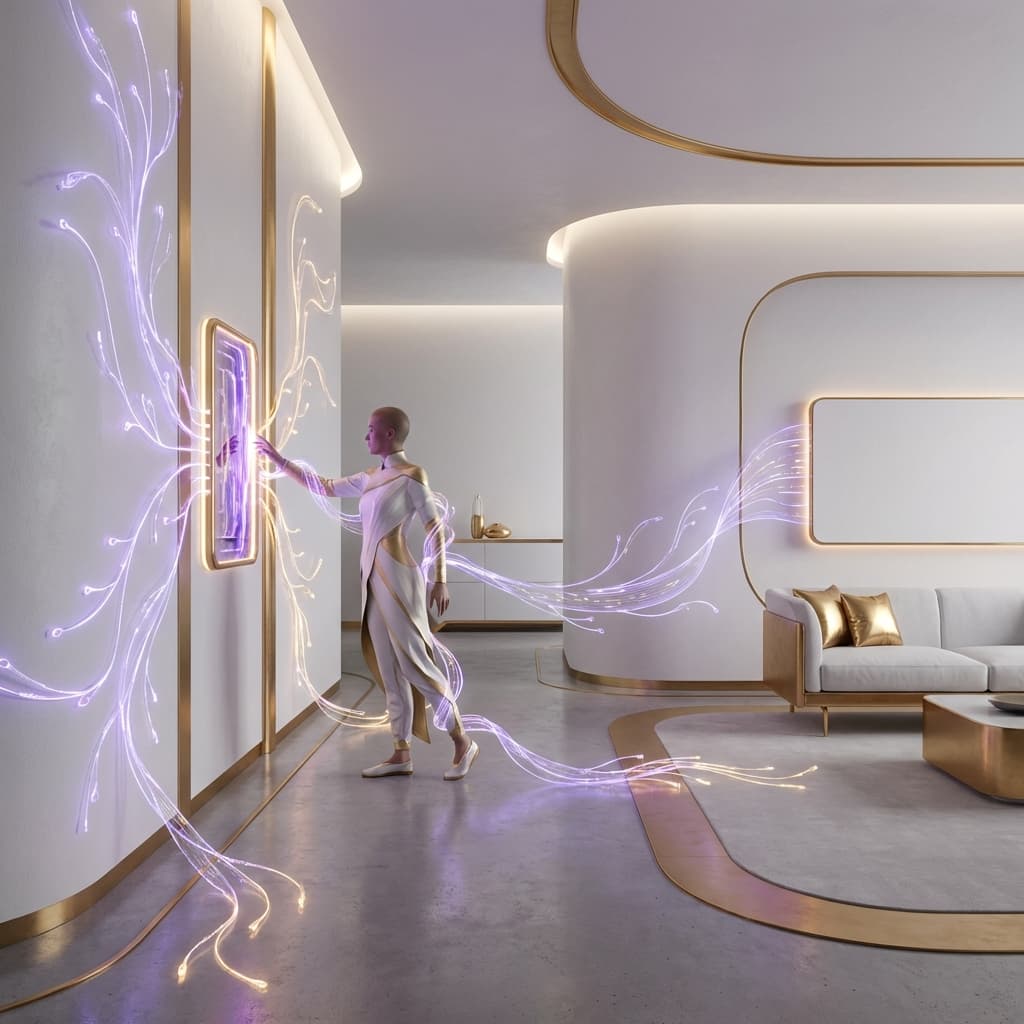
We are the architects of our own experience. If we allow the "Sentient Vines" of technology to wrap around our lives in exchange for a few saved seconds, we shouldn't be surprised when we find ourselves trapped.
To lead a visionary life, we must occasionally Intentionalize the Friction.
- Flip the switch.
- Walk the route without the GPS.
- Close the lid.
These small acts of "Digital Defiance" are the only way to remind the machine—and yourself—that you are not a data point. You are a living, breathing, evolving human being who exists outside the "Model."
Conclusion: The Sanctuary of the Threshold
Technology should be our servant, not our shadow.
The "Big Picture" of the smart age is that we are the ones who define the threshold. We are the ones who decide where the "Convenience" stops and the "Overreach" begins.
Let us build homes that are smart, efficient, and responsive. But let us also make sure they have a "Soul." Let’s ensure that our "Smart Interfaces" are bridges to a better life, not vines that pull us away from our humanity. And let’s remember that the most "Smart" thing of all is the wisdom to know when to turn the machine off.
The interface is glowing. The vines are reaching. But you are the one who decides who is allowed to touch your light.
Key Takeaways for the Visionary Individual:
- The "Extraction" Audit: This week, look at every app on your phone. Ask: "Why does this calculator need my location?" If the "Data-Utility Gap" is too wide, delete the app. Reclaim your boundary.
- The "Analog Path" Test: Once a week, try to perform a daily routine—like cooking a meal or doing your laundry—without using a single "Smart" feature. See if you feel more or less connected to the task.
- The "Edge" Preference: When buying new tech, look for phrases like "On-Device Processing" or "No Cloud Required." These are the gold standards of the 21st century.
- The "Sanctuary" Room: Define one room in your home—preferably the bedroom—as a "Dumb Zone." No sensors, no trackers, no screens. This is your "Citadel of the Self." Protect it with your life.
At ShShell.com, we help you master the "Big Picture" of the sensing age. Information is the tool, but sovereignty is the power. Let’s lead the way to a more human future.