The Rise of the Pocket Brain: Why Small Language Models are the Future of AI Agents
Explore the shift from massive AI models to specialized, efficient Small Language Models (SLMs). Learn why the future of AI agents lies in modular, pocket-sized intelligence that is faster, cheaper, and more private.
The Rise of the Pocket Brain: Why Small Language Models are the Future of AI Agents
For the past few years, the world of Artificial Intelligence has been obsessed with "Big." We’ve watched in awe as models grew from millions of parameters to billions, then hundreds of billions, and eventually, rumors of trillions. We were told that more data, more compute, and more scale were the only keys to unlocking the magic of human-like reasoning. And for a while, it worked. GPT-4, Claude, and Gemini wowed us with their ability to write poetry, debug complex code, and pass the bar exam.
But as the dust settles on the "Golden Era of Scale," a new realization is dawning on the tech community. While a giant, all-knowing brain is impressive, it is often impractical, expensive, and—dare we say—overkill for the tasks we actually need AI to do every day.
We are entering the era of the Pocket Brain.
This is the story of why Small Language Models (SLMs) are not just a "downgraded" version of their larger cousins, but are actually the secret ingredient that will finally make AI Agents useful, ubiquitous, and truly transformative for our daily lives and businesses.
1. The "Big Model" Fatigue
Imagine if, every time you wanted to hang a picture on your wall, you had to call a professional construction crew with a crane, a fleet of trucks, and a team of twenty engineers. They’d get the job done, certainly. The nail would be perfectly straight. But you’d also have to wait three days for them to arrive, pay them a month's salary, and deal with the massive footprint they left in your living room.
That is what using a massive LLM (Large Language Model) like GPT-4 for simple agent tasks feels like.
When an AI agent is asked to "Look at this email and tell me if it’s a refund request," it doesn't need to know the history of the Roman Empire or the intricate details of quantum chromodynamics. It just needs to understand the intent of a customer. When we use 1.7 trillion parameters to do a task that requires maybe 1 billion, we are being wasteful. We are wasting electricity, wasting time (latency), and wasting money.
This "Model Overkill" is the primary barrier preventing us from having AI agents that are truly everywhere. To make the "Magic" real, we need models that are lean, fast, and specialized.
2. What is an AI Agent? (The "Doing" Brain)
Before we talk about the size of the brain, let’s talk about what it’s doing. We often confuse "Chatbots" with "Agents."
- A Chatbot is a library. You ask it a question, it gives you an answer. It’s a static interaction.
- An Agent is a worker. It doesn’t just talk; it does.
An AI agent is a system that can take a goal—like "Book me a flight to Tokyo next Tuesday that’s under $800"—and break it into steps. It looks for flights, checks your calendar, compares prices, and then executs the booking.
Agents are the future of how we interact with technology. They are the "Glue" between our intentions and the digital world. But for an agent to be effective, it needs to make decisions in milliseconds. It needs to be able to call a tool, wait for the result, and then move to the next step without you seeing a "Thinking..." bubble for ten seconds.
This is where the Small Language Model shines.
3. The Magic of Miniaturization: Enter the SLM
A Small Language Model (SLM) is generally defined as a model with fewer than 10 billion parameters. In the world of AI, that’s "pocket-sized." For comparison, the massive models we use today are often 100x to 1000x larger.
But here is the visionary truth: A small, well-trained brain is often smarter at a specific task than a giant, distracted one.
Recent research, most notably from NVIDIA ("Small Language Models are the Future of Agentic AI"), has proven that when we train these small models on high-quality, focused data, they become "Master Craftsmen." They might not be able to write a symphony in the style of Mozart, but they are world-class at following instructions, calling APIs, and generating structured data.
The "Big Three" Champions of the Small World
If you want to understand the future of the Pocket Brain, you need to know these names in detail. They are the prototypes of a new species of software.
1. Microsoft Phi-2 (2.7 Billion Parameters)
Phi-2 proved to the world that "Textbook quality is all you need." Most AI models are trained on the "junk food" of the internet—Reddit comments, generic blog posts, and low-quality data. Phi-2, however, was fed a diet of high-quality "Synthetic Data"—basically AI-generated textbooks and high-reasoning code.
The results were staggering. In benchmarks for logic, common sense, and mathematics, Phi-2 frequently outperforms models with 7B or even 13B parameters. For an agent, this is crucial. When an agent needs to calculate a budget or follow a sequence of three complex logic steps ("If A is true, then check B, but only if C hasn't happened yet"), Phi-2 handles it with the precision of a Swiss watch.
2. NVIDIA Hymba & Nemotron (1.5B to 9B Parameters)
NVIDIA isn't just making the chips; they are making the brains that run on them. The Hymba and Nemotron families are designed for the "Dirty Work" of AI. They are built for code generation, tool calling, and reasoning.
What makes Hymba special is its architecture. It is designed to minimize the "Compute Cost" per token. In a production environment, this means you can serve these models to thousands of users simultaneously without your server room melting. They are the "Industrial Workers" of the AI world—efficient, reliable, and incredibly fast. They specialize in the "Instruction Following" pattern, which is the heartbeat of any agent.
3. HuggingFace SmolLM2 (125M to 1.7B Parameters)
These are the truly "Tiny" models. SmolLM2 represents the frontier of "On-Device AI." To put 125 million parameters in perspective, that is a model that can run on a high-end smartwatch or a very basic smartphone.
Why does this matter? Because of "Ambient Intelligence." Imagine an intelligence that can run inside a smart fridge or a industrial sensor without needing an internet connection. It is the definition of "ubiquitous." SmolLM2 doesn't try to be a philosopher; it tries to be a perfect button-pusher, a perfect data-cleaner, and a perfect status-reporter.
4. Why Small is the New Big: The Four Pillars of the SLM Revolution
Why are we so certain that SLMs will win the Agent war? It comes down to four simple pillars that every business leader and enthusiast needs to understand: Economics, Speed, Privacy, and Specialization.
Pillar 1: The Economics of Common Sense
Running a massive LLM is like keeping a private jet on standby 24/7 just to pick up a loaf of bread. It’s unsustainable for mass-market applications. SLMs, however, run on "Regular" servers—or even the hardware you already own.
- Cost Savings: For a business running millions of agent tasks a day—like scanning legal documents or categorizing support tickets—switching from an LLM to an SLM can reduce the bill from $10,000 a month to $100 a month.
- Infrastructure Independence: You don't need a million-dollar H100 GPU cluster to run an SLM. You can run it on a standard Mac, a Windows PC, or a cheap cloud instance. This removes the "Gatekeepers" of AI.
Pillar 2: The Need for Speed (Latency)
In the world of agents, latency is the enemy of utility. If you ask an agent to "Summarize this urgent Slack thread," and it takes 15 seconds to respond, you could have just read the thread yourself.
SLMs respond almost instantly. They allow for "Fluid Interaction." When the AI responds as fast as you can think, the tool stops feeling like a "Computer" and starts feeling like an extension of your own mind. This speed is what makes "Real-Time Agency" possible. Imagine an agent that listens to your meeting and live-updates your task list in the background with zero lag. That only happens with SLMs.
Pillar 3: Privacy and the "Local Loop"
This is perhaps the most visionary aspect of SLMs. Because these models are small, they don't need to live in a giant data center owned by a tech conglomerate. They can live on your device.
- Data Sovereignty: Your emails, your private notes, and your company's secret financial data never have to leave your network. The SLM "visits" the data locally, processes it, and gives you the result.
- A "Personalized" Brain: Because the model is small, you can easily "attach" your own data to it. Every time you write a note, your local SLM "reads" it and builds a private map of your brain. It knows your family's birthdays, your project deadlines, and your preferences—and it doesn't share them with anyone.
Pillar 4: The Power of the Specialist
Generic intelligence is great for a search engine, but it’s terrible for a specialized tool. An SLM can be "Fine-Tuned" on your specific domain.
If you are a lawyer, you don't need a model that knows how to bake a cake or explain the plot of Inception. You need a model that is an absolute, uncompromising expert in your state's penal code. By focusing the "Attention" of a small model on a narrow field, it becomes more accurate than the giant generalist. It’s the difference between a general practitioner and a brain surgeon.
5. Real-World Magic: Case Studies in Modular Agency
Let’s look at how this changes the world for the average person and the business leader through three intense, real-world scenarios.
Case Study 1: The Customer Support "Traffic Cop"
Imagine a global company like Sony or Nike receiving 500,000 support tickets a day. Historically, they’d use a giant model to read and route these, or they’d use humans. Both are expensive and slow.
With the SLM approach, a tiny model like Hymba-1.5B acts as a "Traffic Cop."
- The ticket arrives.
- The SLM reads it in 100 milliseconds.
- It identifies the intent: "My refund is late."
- It calls a tool to look up the customer's ID.
- It checks the refund status in the database.
- It sends a pre-written, verified response.
The Result: Near-instant resolution for 80% of cases at a fraction of the cost. The customer gets an answer in seconds, and the human support team only sees the truly complex problems.
Case Study 2: The Privacy-First Medical Researcher
A research scientist at a hospital has 100,000 highly sensitive, non-anonymized patient records. They are looking for a link between a specific blood pressure medication and a rare side effect. They cannot, under any circumstances, upload this data to a public cloud model due to HIPAA and ethical reasons.
They run a SmolLM2-1.7B locally on their encrypted workstation. The model reads the records one by one. It doesn't "store" the data; it just extracts the relationships.
- "Patient A had Side Effect X after taking Drug Y."
- "Patient B did not have the effect."
The Result: Revolutionary medical patterns are found without a single byte of private data ever touching the internet. The Pocket Brain enabled a discovery that would have been legally impossible a year ago.
Case Study 3: The "Ghost in the Machine" (IDE Assistant)
A software developer is building a new fintech app. They don't need an AI to write the whole app; they just need it to correctly implement the "Euro to Dollar" conversion logic according to the latest banking standards.
A small, code-specialized SLM lives inside their code editor (IDE). Because it’s so fast, it "Whispers" completions in real-time as they type. It understands the library they are using, the variables they’ve defined, and the specific banking API.
The Result: 3x productivity. The developer stays in the "Flow" because the AI is as fast as their fingers. There is no "context switching" or waiting for a cloud response.
6. The Engineering Blueprint: How the Future is Built
If you are an engineer or a product owner, you might be wondering: "How do I actually build this?" The transition from "LLM-Only" to "Hybrid Intelligence" requires a three-step blueprint.
Step 1: Task Decomposition (The Salami Method)
We must stop asking the AI to "Solve the project." Instead, we break a workflow into "slices."
- Slice 1: Extract the names and dates.
- Slice 2: Check those names against the database.
- Slice 3: Write a three-bullet point summary. Each of these slices is a perfect job for an SLM.
Step 2: The Manager-Worker Pattern (The Future Architecture)
In the most visionary architectures, we still use a Large Model (the LLM) as the Manager.
- The User asks: "Check if my project is on track and notify the team."
- The LLM Manager reads this and decides: "I need to call the Project-Scanner-SLM first, then the Notification-SLM second."
- The SLMs (The Workers) do the heavy lifting of execution.
This "Modular Design" is how we build systems that are both incredibly smart and incredibly efficient. It’s like having a CEO (LLM) and a team of specialized technicians (SLMs).
Step 3: Targeted Fine-Tuning
This is the "Secret Sauce." Instead of using a generic Phi-2, you take 5,000 examples of your company's specific tasks and "Fine-Tune" the model. This is like giving the SLM a specialized PhD in your business. After two days of fine-tuning, that 2.7B model will outperform GPT-4 on your specific task, because it knows your "Dialect" and your "Rules" better than any general-purpose model ever could.
7. The Mathematical Reality (Without the Jargon)
Why can a small model even compete? It comes down to Effective Information Density.
A model like GPT-4 knows how to bark like a dog, explain the history of the Sassanid Empire, and write a sonnet in Swahili. That’s amazing, but all that "Knowledge" takes up space in the neural network.
An SLM like Phi-2 doesn't know about Swahili sonnets. Its neural network is 100% focused on logic and structure. When you narrow the "Subject Matter," you increase the "Intelligence Density."
Think of it like a flashlight vs. a laser. A flashlight (LLM) illuminates the whole room. It’s great for finding your shoes. But a laser (SLM) can cut through steel. When it comes to agents, we need the laser.
8. A Day in the Life: Living with the Pocket Brain
Let’s step into the shoes of a person living in 2027, where the SLM revolution has fully arrived.
7:00 AM: Your alarm goes off. Your phone—running a local SLM—has been monitoring your sleep and your calendar. It knows your first meeting was cancelled, so it let you sleep an extra 20 minutes. It didn't send this data to the cloud; it happened while you were in Airplane Mode.
10:00 AM: You are in a meeting. Your laptop’s SLM is listening. It’s not "Recording" the audio; it’s extracting "Entities." When the boss says, "Sudeep, can you check the Q3 numbers by Friday?" the SLM instantly creates a task in your To-Do list, links it to the Q3 spreadsheet, and sets a reminder. All of this happens with zero latency.
2:00 PM: You need to analyze a massive, 500-page contract. You drag it into your local browser. A specialized "Legal-SLM" scans the document in 5 seconds. It highlights the three clauses that conflict with your company’s policy. It doesn't hallucinate, because it was fine-tuned on your specific company handbook.
6:00 PM: You are driving home. Your car’s SLM—running on a chip with no internet—detects that the engine is making a slightly rhythmic clicking sound. It cross-references this sound against its internal database of mechanical issues. It tells you: "Your fan belt is starting to fray. I've already messaged the local garage and they have the part in stock."
9. The Ethical Vision: AI for the Rest of Us
There is an ethical imperative behind the SLM movement. If AI remains "Giant Only," then only a handful of corporations in Silicon Valley will ever own the "Brains" of the world. We will all be renters of intelligence, paying a monthly fee for the privilege of a cloud connection.
But SLMs are Sustainable, Accessible Intelligence.
- The Teacher in Africa: Can run a high-quality educational agent on a $50 refurbished tablet with no internet.
- The Small Business Owner: Can build a world-class customer service agent without a venture capital budget.
- The Individual: Can have an AI partner that is truly theirs, not a window into a corporate server.
The future of AI isn't about building one giant god-like machine. It’s about empowering every human on earth with a "Pocket Brain" that is fast, private, and powerful.
10. Conclusion: The Shift in the Wind
We are witnessing a fundamental shift in the wind. We are moving from the "Era of Awe" to the "Era of Utility."
The researchers at NVIDIA, Microsoft, and HuggingFace have shown us the way. They’ve proven that we don’t need to fear the "Scaling Wall." We don’t need more and more data to make AI useful. We just need Better Architecture and Specialized Focus.
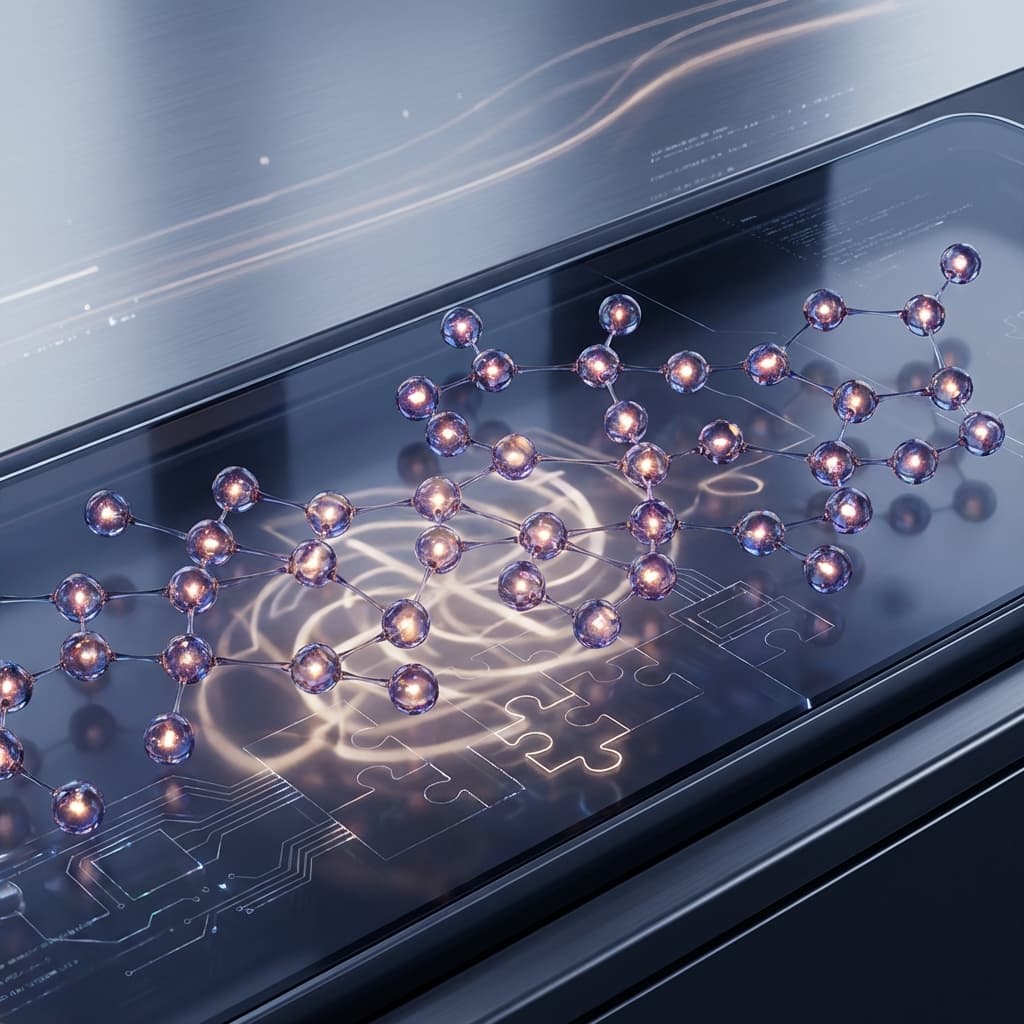
As we look toward the next generation of AI agents, look past the hype of the trillion-parameter monsters. Look at the small, glowing crystalline orbs of modular intelligence. Look at the Pocket Brain.
Because the most powerful intelligence isn't the one that knows everything; it’s the one that is there for you, exactly when you need it, doing exactly what you want, in the palm of your hand.
ShShell.com – Exploring the Frontier of AI Engineering and Digital Growth. This article was written to give back to the tech community, seeking to turn complex research into a clear, visionary roadmap for all.
Deep Dive: Comparison Table for Decision Makers
| Feature | Large Language Models (LLMs) | Small Language Models (SLMs) |
|---|---|---|
| Best For | Creative writing, general reasoning, brainstorming, coding complex apps. | Task execution, API calling, data extraction, on-device apps. |
| Budget | High ($$$ per task). | Extremely Low ($ per 1,000 tasks). |
| Latency | 1-5 seconds (Can feel sluggish). | 50-200 milliseconds (Feels instant). |
| Privacy | Cloud-based (Data leaves your network). | Local/Edge (Data stays with you). |
| Examples | GPT-4o, Claude 3.5, Gemini 1.5 Pro. | Phi-2, Hymba-1.5B, SmolLM2. |
| Customization | Hard/Expensive to fine-tune. | Easy/Cheap to fine-tune for niche tasks. |
Final Exercise for the Reader: Identify Your Agents
Take a moment to look at your daily workflow.
- Identify one task you do every day that is repetitive and follows a pattern (e.g., "Summarizing meeting notes" or "Sorting emails").
- Imagine a small, fast model doing that task for you locally on your machine.
- Ask yourself: "Do I really need a supercomputer to do this?"
The answer is almost certainly "No." And that "No" is where the future of yours and your business's success begins.