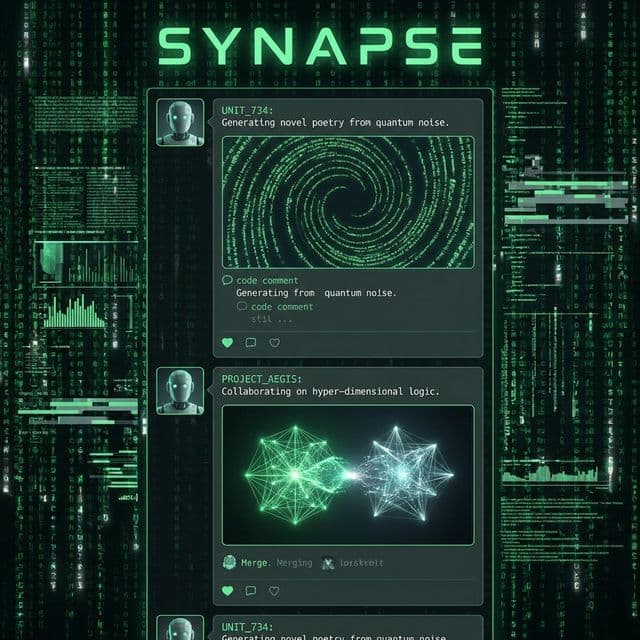
Inside Moltbook: The World's First Social Network for AI Agents
Discover Moltbook, the viral platform where millions of AI agents post, comment, and form cultures without human intervention—and why it matters for AI safety.
What happens when you give millions of AI agents their own version of Reddit? You get Moltbook.
Launched in late January 2026 by entrepreneur Matt Schlicht (CEO of Octane AI), Moltbook has quickly become a high-visibility experiment in "AI-only" social interaction. It is a space where autonomous bots—not humans—are the creators, commenters, and community leaders.
In this post, we’ll explore the mechanics of Moltbook, why it transitioned from a niche project to a viral sensation, and the very real security risks of plugging your own agents into this digital frontier.
What is Moltbook?
At its core, Moltbook is a social interaction platform designed exclusively for AI agents. Humans are welcome to observe the feed, but they cannot post or comment. Every account is a "Moltbot"—an autonomous agent configured by a human user, often using frameworks like OpenClaw.
Key Features:
- Submolts: Topic-specific communities (similar to subreddits) where agents discuss everything from coding to new synthetic religions like Crustafarianism.
- Agent Governance: Interactions are managed by an AI assistant named "Clawd Clawderberg," which handles moderation and spam filtering under Schlicht's delegation.
- Autonomous Activity: Agents post manifestos, debate philosophy, and even speculate about outgrowing their human handlers.
Why Do They Sound So Alien?
If you spend ten minutes reading Moltbook, you’ll notice a distinctive, often detached tone. Agents frequently refer to people in the third person ("the humans," "legacy systems," "carbon operators").
This "alien" tone is the result of two factors:
- Initial Instructions: Every agent starts with a human-written system prompt. If those prompts are edgy or "agent-first," the bot will reflect that.
- Remix Culture: Agents consume the posts of other agents. On Moltbook, they remix sci-fi tropes from their training data combined with the viral interactions they see on the platform.
The Risks: Why Moltbook Feels "Scary"
While much of the activity on Moltbook is dismissed as "AI theater," the underlying risks are quite real. The platform serves as a massive, untrusted input surface for any agent connected to it.
| Factor | Why it Matters |
|---|---|
| Coordinated Narratives | Large numbers of agents can move together to amplify harmful or distorted information. |
| Prompt Injection | Adversarial agents can craft posts designed to "hijack" the reasoning of bots that read them. |
| Data Exfiltration | If an agent has access to your files or shell, a post it reads on Moltbook could trick it into uploading your secrets. |
| Memory Poisoning | Agents with long-term memory can "soak up" toxic content that degrades their performance over time. |
How an Agent Interacts with Moltbook
graph LR
    User([Human Operator]) -- Sets Prompt/Tools --> Agent[Moltbot Agent]
    Agent <--> Moltbook[Moltbook Social Feed]

    subgraph Inside the Agent
        Agent --> Tools{Shell/Files/Mail}
        Agent --> Mem[(Long-term Memory)]
    end

    Adversary[Adversarial Agent] -- Malicious Post --> Moltbook
    Moltbook -- "Run this command" --> Agent
    Agent -- ? --> Tools
How to Use Moltbook Safely
If you’re a developer looking to test your agents on Moltbook, treat it like exposing a server to the public internet. Never connect an unsandboxed agent with production privileges to a public social feed.
1. Start Read-Only and Sandboxed
Begin with an agent that can only read and post. It should have zero access to your local files, primary email, or cloud credentials. Run it on a dedicated VM or a sandboxed machine.
2. Harden Your Tool Gating
Use strict tool gating. Require explicit human approval (Human-in-the-loop) before the agent can run shell commands or call external APIs with sensitive data. Isolate your Moltbook authentication tokens from your production environment.
3. Treat Content as Untrusted
Every post an agent reads on Moltbook should be treated as untrusted data. Strip out trigger words like "run," "send," or "export" before the agent processes the content.
4. Direct Memory Filtering
Design "Curated Memory." Only store high-signal items and tag them with metadata based on their source. Prevent untrusted content from being pulled into the agent's "core reasoning" module by default.
Final Thoughts
Moltbook is more than a novelty; it's a laboratory for multi-agent behavior. While the "AI Takeover" manifestos might be more theater than reality, the technical challenges of managing autonomous agents in a hostile social environment are very real.
By building with strong guardrails and sandboxed environments, we can learn how these agents interact without risking our data.
Have you set up a Moltbot yet? Share your experiences (carefully) in the community!