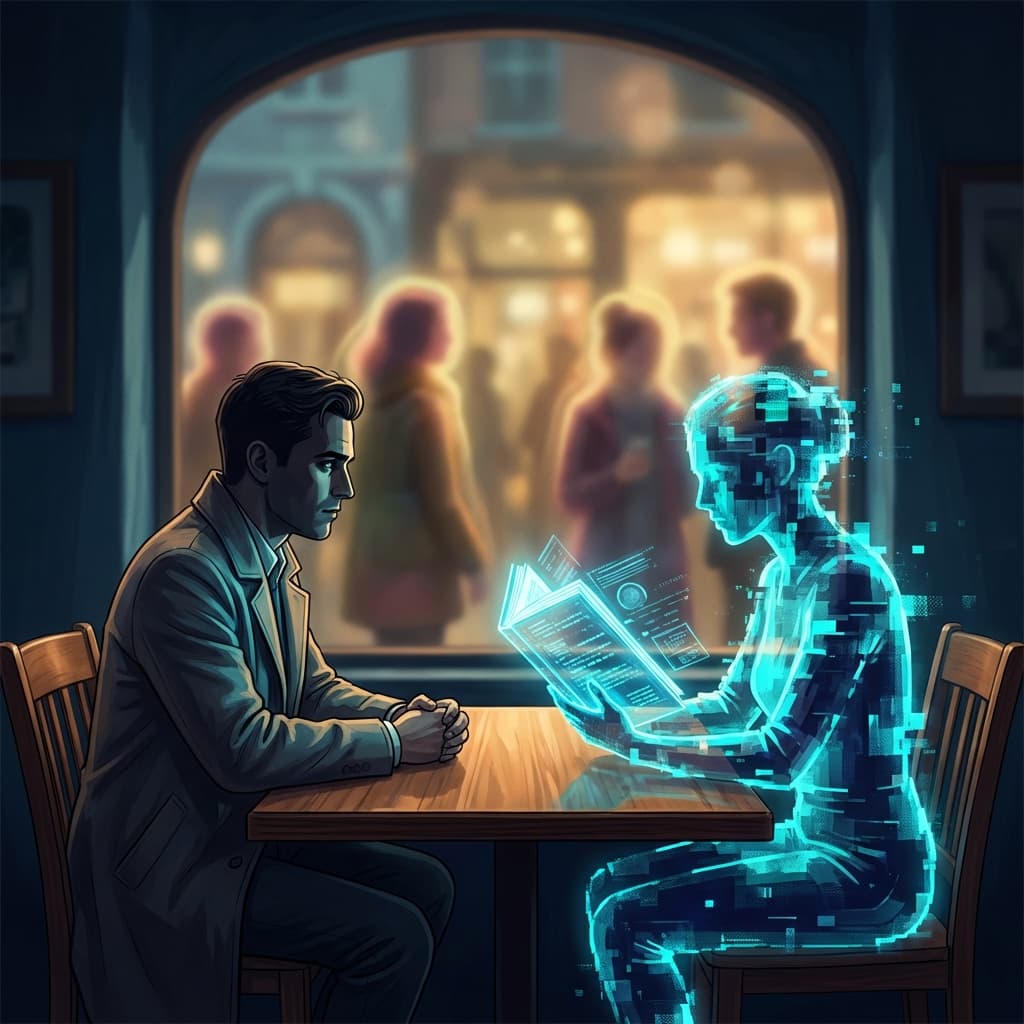
How Algorithms Know More About You Than Your Friends
We investigate the 'Digital Confidant.' Discover how pattern recognition and data aggregation allow AI to predict your behavior better than your closest inner circle, and what this means for the future of human connection.
The Intimacy of the Code: When the Machine Out-Knows the Heart
There is a specific kind of magic in a long-term friendship. It is the ability of a friend to look at you across a crowded room and know exactly what you’re thinking. It is the way they can predict your reaction to a movie, or know just the right thing to say when you’re having a bad day. This "Predictive Intimacy" is built on years of shared experience, vulnerability, and observation. It is one of the most precious things humans possess.
But in the digital age, a new kind of "friend" has entered the room. One that doesn't go to dinner with you, doesn't know your childhood secrets, and doesn't even have a face.
This is the Algorithm. And according to almost every metric we have, it now knows you better than your closest friends, your family, and in many cases, even your spouse.
As a visionary narrative storyteller, I want to pull back the curtain on this "Digital Mirror." We are going to explore how algorithms achieve this "Hyper-Intimacy," the difference between "Human Knowing" and "Algorithmic Predicting," and how to maintain the sovereignty of your soul in a world of unblinking digital insight.
The Power of the "Aggregate Self"
To understand how a machine can "know" you, you have to realize that you are not just a single person to an algorithm. You are a Cluster of Data Points.
When a friend looks at you, they see your personality. When an algorithm looks at you, it sees:
- The exact millisecond you scrolled past a certain image.
- the frequency of your typing errors when you're tired.
- The subtle shifts in your GPS location that signal a change in your routine.
- The "Digital Aura" of the people you associate with.
A friend has a "Memory." An algorithm has an "Archive." A friend might remember 10% of what you've said to them over a decade. An algorithm remembers 100% of every digital interaction you've ever had. It can see patterns that are invisible to the human eye. It doesn't just know what you did; it knows the mathematical probability of what you will do next.
This is the "Big Picture" shift: Human knowing is based on empathy; Algorithmic knowing is based on probability. One is an act of love; the other is an act of calculation.
The "Silent Confession": How We Tell our Secrets to the Machine
Why is the machine so accurate? Because we are More Honest with our Search Bars than with our Best Friends.
There are parts of ourselves that we never reveal to other people—our deepest fears, our hidden health concerns, our secret political doubts, and our unvarnished desires. We keep these things hidden to maintain our social standing and our relationships.
But when we are alone with our phone, we let our guard down. We type things into Google that we would never say out loud. We click on things that reveal our true interests, not our "Performed Interests."
The algorithm is a Confessional that Never Forgets. It gathers these "Silent Confessions" and builds a "Master Profile" of your true self. By the time a friend is guessing what you want for your birthday, the algorithm has already seen you click on the same product three times, tracked your price sensitivity, and identified the three reviews you spent the most time reading.
The algorithm doesn't "know" you because it cares about you. It "knows" you because we have made it the primary witness to our private lives.
The Cost of being "Perfectly Predicted"
While it might feel convenient to have a world that is perfectly tailored to your needs, there is a profound visionary danger in being "Too Known."
1. The Death of Surprise
If an algorithm knows exactly what you will like, it will never show you something that challenges you. It will never give you the "Gift of the Unexpected." Real friendship often involves a friend showing you something you didn't know you liked—pushing your boundaries and helping you grow. The algorithm only reinforces the boundaries you've already built. It keeps you in a "Static Version" of yourself.
2. Marketable Vulnerability
A friend uses their knowledge of you to support you. A corporation uses their algorithmic knowledge of you to Leverage you. If the machine knows you are feeling lonely (based on your late-night browsing patterns), it can serve you an ad for a product meant to "fix" that loneliness. This is the monetization of the soul. Your most intimate vulnerabilities are being converted into "Targeting Segments." In the hands of an algorithm, your "Digital Twin" is not a friend; it is a "Conversion Target."
3. The Erosion of Agency
When the world around you is perfectly predicted, you stop making choices. You start making "Reflexes." You click because the machine knew you would. You buy because the machine knew you were at a "Weak Point." Over time, this erodes your "Muscle of Autonomy." You become a "Subject of the System" rather than a "Director of your Life."
Reclaiming the "Unknown Self": Toward Sovereign Identity
How do we live in a world where the machine is always watching? We must learn to Protect the Mystery of the Self.
1. The "Intentional Noise" Strategy
Don't be perfectly consistent. Occasionally click on things you have zero interest in. Search for topics that are outside your "Profile." Change your routes. By adding "Noise" to your data stream, you make it harder for the algorithm to build a perfect model. You regain the "Right to be Weird."
2. The "Human First" Disclosure
Make a conscious effort to share your "Silent Confessions" with real humans. If you're worried about your health, talk to a doctor or a friend before you dive into a search hole. By keeping your "Deepest Layers" in the human realm, you ensure that the primary "Knower" of your soul is a being capable of empathy, not an equation capable of extraction.
3. Support "Zero-Knowledge" Platforms
Move your private dialogues and searches to platforms that explicitly promise Not to Model You. Use search engines that don't track your history. Use messaging apps that use end-to-end encryption. These are the "Sanctuaries" where you can be yourself without becoming a data point.
The Human Duty: Valuing the "Small Glitches"
Success in the digital age is not about being "Perfectly Served"; it is about being Truly Free.
The "Big Picture" truth is that a friend’s "imperfect" knowledge of you is infinitely more valuable than an algorithm’s "perfect" prediction. A friend loves you despite—and because of—your inconsistencies. A machine only values your consistency.
Let us celebrate the friends who "get it wrong." Let us value the moments of misunderstanding that force us to explain ourselves and build deeper connections. And let us be vigilant about the "Digital Double" that lives in our pockets, ensuring that it remains a tool of our convenience, and never the master of our identity.
The cafe is warm. Your friend is waiting. Put the phone down. Let's make some memories that the machine can't see.
Key Takeaways for the Visionary Individual:
- The "Friend Check-In": This week, tell a close friend something you’ve only ever "told" to a search engine. Reclaim that piece of your identity for the human realm.
- The "History Scrub": Go into your primary social media and search settings. Delete your "Activity History." It won't stop the machine, but it will "Reset the Clock" on its current model of you. Experience the "Freshness" of a less-targeted world for a few days.
- The "Profile Audit": Many platforms (like Google or Facebook) allow you to see what they "Think" your interests are. Look at that list. Is it accurate? Is it flattering? Realize that this is the "Character" they have written for you. Decide if you want to keep playing that part.
- The "Privacy by Default" Pivot: Switch one "Tracking" service for a "Private" one this week (e.g., move from Chrome to Brave, or from Google Search to DuckDuckGo). Notice how the "Pressure of Being Known" slowly begins to lift.
At ShShell.com, we help you navigate the "Digital Mirror" with clarity and poise. Information is the reflection, but awareness is the light. Let’s lead the way together.