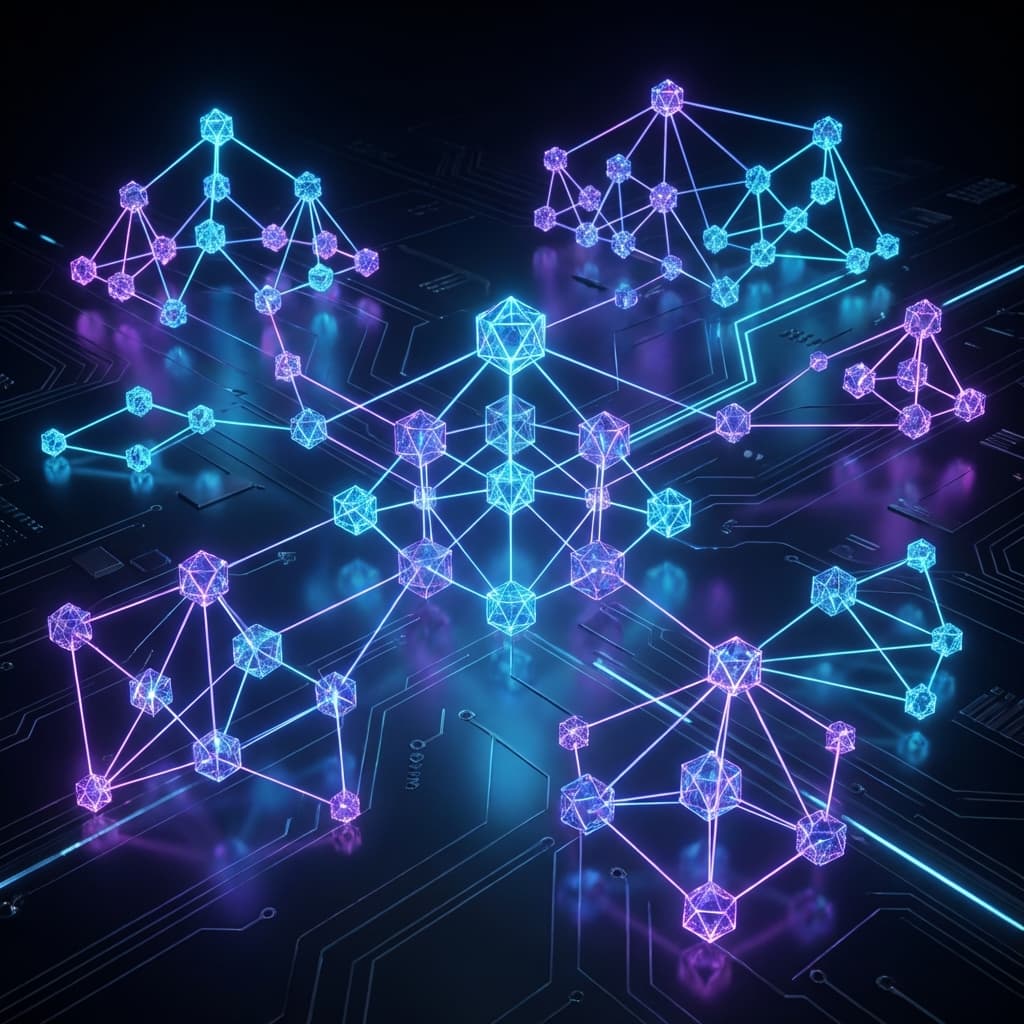
The Future: Neuro-Symbolic Graph AI
The horizon of intelligence. Explore the convergence of Neural Networks (LLMs) and Symbolic Logic (Knowledge Graphs) into a unified system that reasons with the speed of an intuition and the precision of a computer.
The Future: Neuro-Symbolic Graph AI
We are currently at the "Interface" age. We have LLMs (The Neural part) talking to Knowledge Graphs (The Symbolic part) via Cypher and Text. But the future is Neuro-Symbolic Convergence. This is a future where the distinction between the "Database" and the "Model" disappears. The model is the graph.
In this final lesson of Module 18, we will explore the Convergence Roadmap. We will look at Graph-of-Thought (GoT) reasoning, where the AI's internal scratchpad is a dynamic graph. We will look at Vector-Graph Unified Indices and how the next generation of LLMs will be trained directly on structural knowledge to eliminate hallucinations by default.
1. Beyond the Prompt: Graph-of-Thought (GoT)
Today: "Chain-of-Thought" (Linear: A -> B -> C). Future: "Graph-of-Thought" (Networked). The AI simultaneously explores multiple branches of a problem, merges conflicting ideas, and cycles back to verify facts—all within a graph structure. This allows for Non-Linear Intelligence that can solve problems far too complex for a linear prompt.
2. Integrated Graph Weights
Currently, an LLM's "Knowledge" is baked into its weights during training (Static). The next generation of "Graph-Aware" models will have Dynamic Weights that are linked to a Knowledge Graph.
- If you update a node in the graph, the model's "Intuition" about that topic changes Immediately without re-training.
- This is the ultimate "Correctable AI."
3. The End of the "Vector vs Graph" Debate
By 2027, the industry will move toward Unified Vector-Graphs. Instead of searching a Vector DB then a Graph DB, you will search a single Topological Embedding Space. Every node will be a coordinate, and every link will be a "Reasoning Vector." This will deliver the fuzzy search of RAG with the mathematical precision of Graph logic in a single operation.
graph TD
    subgraph "Today (Separate)"
    LLM[Neural LLM] <--> KG[Symbolic Graph]
    end

    subgraph "Future (Neuro-Symbolic)"
    NS[Unified Graph-Model]
    end

    style NS fill:#34A853,color:#fff
    note[The 'Brain' and the 'Knowledge' are the same thing]
4. Parting Advice for the Advanced Engineer
- Don't bet on just one DB: The future is polyglot. Learn how to move knowledge between Vector, Graph, and SQL.
- Focus on the Extraction: The quality of your graph is the ceiling of your AI's intelligence. Mastering "Knowledge Engineering" is more important than mastering "Prompt Engineering."
- Stay with Agents: The most advanced RAG systems aren't "Searches"; they are "Active Reasoners" (Module 12).
5. Summary and Exercises
The Neuro-Symbolic age is the End of Hallucinations.
- GoT provides the non-linear reasoning needed for deep engineering and science.
- Dynamic Weights solve the "Knowledge Cutoff" problem forever.
- Unified Spaces simplify the RAG stack into a single, high-performance engine.
- Structure is Truth: As AI becomes more powerful, the Knowledge Graph becomes the "Anchor" that keeps it tethered to reality.
Exercises
- Future Design: If you could "Link" an AI's brain directly to your company's Knowledge Graph, what is the first "Security Rule" you would worry about?
- Personal Roadmap: Which of the "Advanced Patterns" in this module (Meta-Graphs, Hybrid, Streaming) is most relevant to your current job? Why?
- Visualization: Draw a brain (Model) and a network (Graph). Draw them slowly overlapping until they are a single shape.
Congratulations! You have completed Module 18: Advanced Graph RAG Patterns. You are now looking at the future through the eyes of an architect.
In our final module, Module 19: Capstone Design Exercise, you will put everything you've learned into a single, production-ready blueprint.