Supply Chain and Logistics Optimization: Graph Resilience
Navigate the global network. Learn how Graph RAG enables real-time impact analysis of supply chain disruptions—from factory strikes to shipping delays—by reasoning across a web of dependencies.
Supply Chain and Logistics Optimization: Graph Resilience
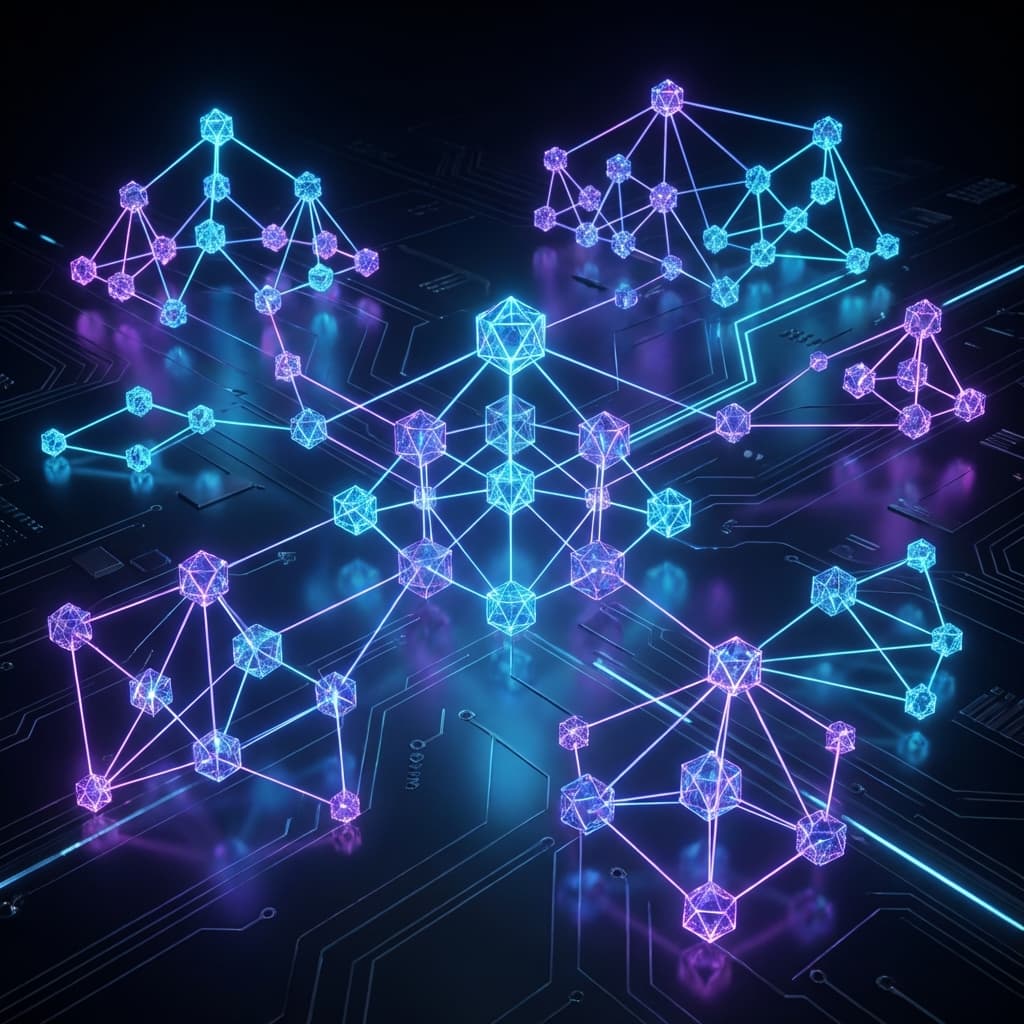
A supply chain is not a "Chain." It is a Global Graph. If a specific factory in Taiwan goes offline, it doesn't just stop "Production A." It stops the 15 sub-components that are used in 100 different products sold in 50 countries. Tabular data (Excel/ERP) is terrible at showing this "Ripple Effect." Graph RAG is built for exactly this.
In this lesson, we will look at how to build a Global Dependency Graph. We will learn how to perform Impact Analysis (answering the question: "If this ship is delayed, which 5-star customers will be affected?"). We will see how an AI agent can reason through thousands of logistics links to suggest the Shortest Alternative Path during a disaster.
1. The Logistics Graph Schema
- (:Factory)
{location, capacity} - (:Part)
{SKU, lead_time} - (:Product)
{BOM_list} - (:Shipment)
{ETA, status} - (:Customer)
{priority, location}
2. Impact Analysis (The Downstream Crawl)
When a disruption happens (e.g., a port closure):
- Tag the Node: Mark the
Portnode asstatus: Blocked. - Breadth-First Search: Follow the
[:CONTAINS]and[:NEXT_DESTINATION]edges downstream. - Identify Terminal Nodes: Find the
Customernodes at the end of these paths.
The RAG Response: "The closure of the Suez Canal affects 50 of our Tier-1 orders. The most critical one is the Heart Valve shipment for Hamburg Hospital, currently 2 hops away from the blockage."
3. Alternative Pathfinding (The Optimization)
If a path is blocked, the AI agent can run a Shortest Path query (with weighted edges) to find the next best route.
- Weights: Cost, Time, Risk.
Logical Reasoning: "I've found an alternative route via the Cape of Good Hope. It adds 10 days to the lead time but avoids the high-risk zone. Do you want me to update the flight plans for the perishable components?"
graph TD
    P1[Port A: BLOCKED] --- S1[Shipment 101]
    S1 --- Pr1[Product: Laptop]
    Pr1 --- C1[Cust: Apple]

    P1 -.->|Alternative| P2[Port B: Open]
    P2 --- S1

    style P1 fill:#f44336,color:#fff
    style P2 fill:#34A853,color:#fff
4. Implementation: A "What-If" Analysis in Cypher
MATCH (disruption:Location {name: 'Suez'})<-[:LOCATED_AT]-(shipment)
MATCH (shipment)-[:TRANSPORTS]->(product)-[:ORDERED_BY]->(customer)
WHERE customer.priority = 'Critical'
RETURN customer.name, product.name, shipment.eta;

// This query identifies the most 'Critical' customers
// currently delayed by a specific geographical point.
5. Summary and Exercises
Logistics Graph RAG is the "Dashboard of Reality."
- Dependency Mapping reveals the hidden vulnerability of a product.
- Downstream Crawling predicts the impact before it happens.
- Dynamic Pathfinding provides the solution to the problem.
- Real-time Ingestion (from GPS/API) keeps the graph "Live."
Exercises
- Dependency Task: Your product is a "Cupcake." List 3 factory-level dependencies that would be nodes in your graph. (e.g., Flour Mill, Sugar Refinery, Packaging Plant).
- The "Just-in-Time" Risk: If every part has a "Lead Time" property, how would you write a query to find the "Thinnest" link—the part that if delayed by 1 day, delays the whole project?
- Visualization: Draw a graph representing a "Hub and Spoke" delivery network. Mark the "Hub" node as failed. How many "Spokes" are affected?
In the final lesson of this course, we look at what's next: The Future of Graph RAG: Graph Neural Networks (GNNs).