Why Data Breaches Feel Normal and Why That Is a Problem
We explore the dangerous phenomenon of 'Breach Fatigue' in the AI age. Understand why we’ve stopped being shocked by massive data leaks, and why our apathy is the greatest security risk of the 21st century.
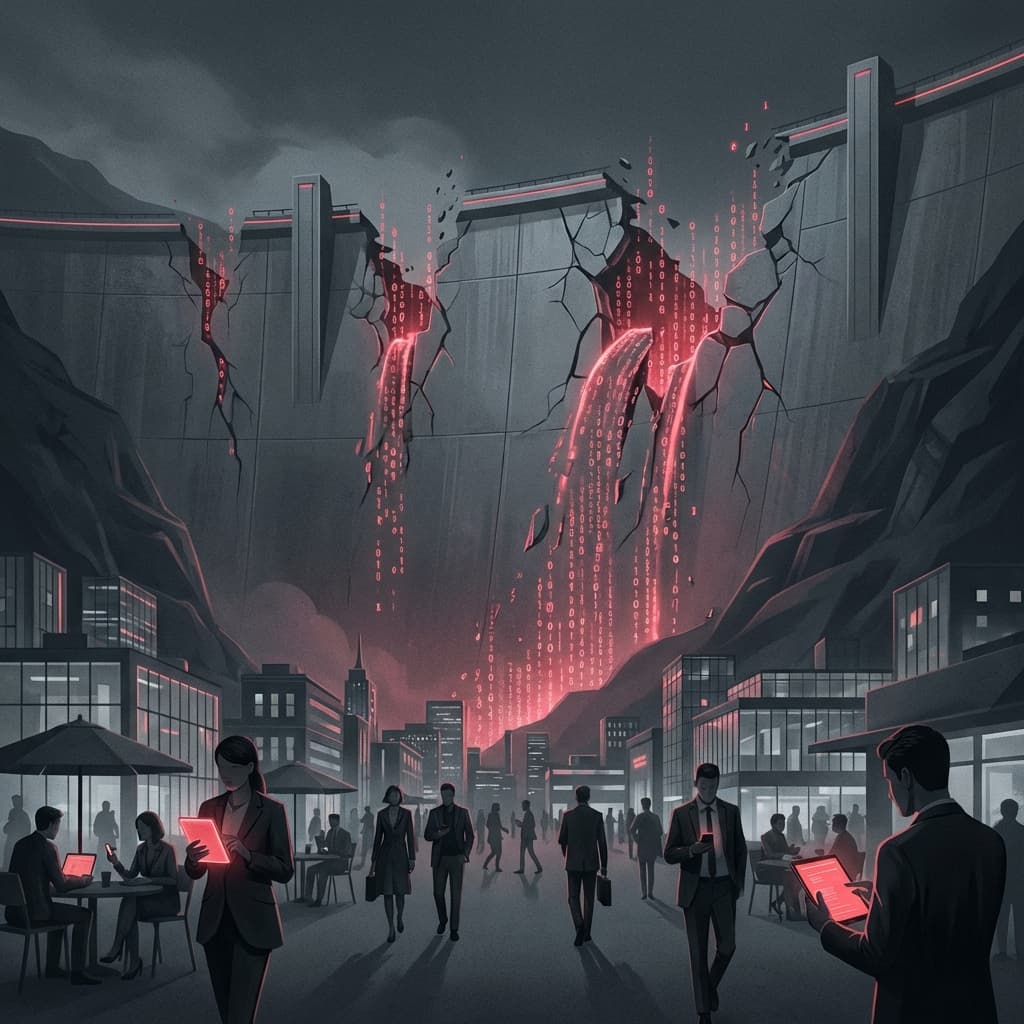
The Crumbling Dam: The Silent Toxicity of Data Breach Fatigue
We have entered a strange era of human history where the "Exceptional" has become the "Everyday."
In the past, a massive data breach—where millions of personal records were leaked to the dark web—would have been a week-long national headline. It would have sparked outrage, congressional hearings, and a collective rush to change passwords. Today, when we see a notification that our data has been "compromised" in yet another hack of a major airline, hotel chain, or social platform, our reaction is often a tired sigh. We delete the email, think "Oh, not again," and go back to our coffee.
This is Breach Fatigue. And it is one of the most dangerous psychological states of the 21st century.
As a visionary narrative storyteller, I want to take you beneath the surface of this apathy. We are going to explore why we’ve stopped caring, how this silence is being weaponized against us, and why reclaiming our sense of "Digital Outrage" is essential for the future of a secure society.
The Anatomy of Apathy: Why We Stopped Reacting
To understand why data breaches feel normal, we must look at how our brains handle constant, low-level stress.
Humans are wired for Acute Crisis. We are excellent at reacting to a fire in the room or a sudden threat. But we are very poor at reacting to "Statistical Threats"—threats that are invisible, ongoing, and distributed across millions of people.
1. The Paradox of Scale
When a breach involves 500 million people, the numbers become so large they lose their meaning. It’s hard to feel a personal sense of violation when you are just one half-billionth of the victim pool. We begin to think, "If everyone is compromised, then no one is specifically Targeted." This is a comforting, but false, sense of security.
2. The Lack of Immediate Consequence
Unlike a physical theft where your car or wallet is gone, a data breach usually has no immediate, visible impact. You don't "feel" your social security number being sold on a dark web forum. Life goes on exactly as it did before. The damage—identity theft, financial fraud, or targeted phishing—often happens months or years later, making it difficult for the human brain to connect the cause to the effect.
3. The Sense of Inevitability
Perhaps the most damaging factor is the feeling that we have no choice. We are told that to live a modern life, we must give our data to these companies. And if even the most powerful corporations on earth can't protect that data, we feel a sense of learned helplessness. "If they're going to get hacked anyway, why bother fighting it?"
The Visionary Risk: Why Normalization is a Trap
The normalization of data breaches is not just a personal problem; it is a Systemic Failure. When we stop reacting, the pressure on companies to protect us disappears.
1. The Erosion of Corporate Accountability
If a company knows that a major data breach will only result in a 24-hour news cycle and no loss of customers, their incentive to invest in high-end, proactive security vanishes. Security moves from being a "Core Value" to being an "Acceptable Risk." They begin to treat data breaches as a "Cost of Doing Business"—like a retailer might treat shoplifting.
But data isn't like physical inventory. When a record is "stolen," the company still has it, but so does the thief. The toxicity remains in the world forever.
2. The Rise of the "Aggregated Profile"
While a single breach might only reveal your email and a hashed password, the Normalization of Breaches creates a world where hackers can combine data from multiple leaks.
Think of it as a jigsaw puzzle. Breach A has your name and address. Breach B has your phone number and birthdate. Breach C has your mother’s maiden name and your old employer. By combining these, bad actors can build a "Master Profile" that allows for incredibly sophisticated social engineering and identity theft. Our apathy allows these puzzles to be completed.
3. The Death of the "Private Life"
If we accept that our data will inevitably be public, we begin to self-censor. We lose the "Freedom of the Unobserved." Innovation, dissent, and personal growth all require a degree of privacy. If we assume the dam is always broken, we stop building homes in the valley of creative freedom.
The Future of "Active Security": Beyond the Password
How do we break the cycle of fatigue? A visionary path forward requires us to move from "Defensive Reaction" to "Proactive Sovereignty."
1. Reclaiming the "Right to Outrage"
We must stop accepting "We value your privacy" as a valid apology. We should demand radical transparency. When a company is breached, they should be required to provide a human-readable explanation of why it happened, exactly what was taken, and what they are doing to ensure it never happens again. We should be willing to leave platforms that repeatedly fail this basic test of trust.
2. The Move to "Distributed Identity"
The current problem is that we have "Centralized Honeypots"—massive servers where millions of lives are stored in one place. This is a dream for hackers.
The visionary future lies in Decentralized Identity. Imagine a world where your data isn't "stored" by a bank or a social media company. Instead, you hold the key to your data on your own device. When you need to prove your identity, you provide a "Proof" without ever handing over the raw data itself. In this world, there is no "Dam" to break, because the "Water" isn't stored in one place.
3. The "Zero-Trust" Mindset for Individuals
We must adopt a "Zero-Trust" philosophy in our own digital lives. This means assuming that the infrastructure is already compromised.
- Unique Passwords for Everything: Use a password manager as your first line of defense.
- Hardware Security Keys: Move beyond SMS-based 2FA to physical keys that are nearly impossible to hack remotely.
- The "Context Test": If a service asks for your birthdate or your phone number and they don't strictly need it, give them a placeholder or decline. Stop feeding the honeypots.
The New Social Contract: Security as a Human Right
In the industrial age, we fought for clean water and safe working conditions. In the AI age, we must fight for Digital Safety.
A visionary society is one where data protection isn't just an "IT problem"; it is a fundamental human right. It is the foundation of trust in the 21st century. If we can't trust the systems that manage our lives, those systems will eventually fail.
The dam is crumbling, and the water is rising. But we don't have to keep drinking our coffee in silence. We can pick up the tools, we can sound the alarm, and we can build a new kind of infrastructure—one that respects the sanctity of the individual.
Conclusion: The Wisdom of the Watcher
Data breaches feel normal because we have been conditioned to believe they are the price of progress. But they are actually the price of neglect.
By understanding the "Big Picture" of Breach Fatigue, you regain your power. You can choose to be the person who still changes their password, who still asks "Why?", and who still demands a better future for their digital life.
The tech is the tool, but the Trust is the spirit. Let’s make sure we don't lose the spirit in the name of a seamless life.
Actionable Steps for the Visionary User:
- The "Have I Been Pwned" Check: Visit HaveIBeenPwned.com right now. Look at the list of breaches your email has been involved in. See the "Aggregated Profile" for yourself.
- The Password Manager Shift: If you aren't using one, start today. Moving all your primary accounts to unique, complex passwords is the single most effective way to break the "Jigsaw Puzzle" risk.
- The "Account Delete" Day: Pick one service that was recently breached and that you no longer use. Delete your account. Every account you delete is one less "Thread" the system has to compromise.
- Demand Multi-Factor (MFA): Turn it on for every service that offers it. Even if a hacker has your password, a second factor keeps them out.
At ShShell.com, we are committed to looking behind the headlines to the deep psychology of the digital age. Sovereignty starts with awareness. Let’s lead the way to a more secure future.