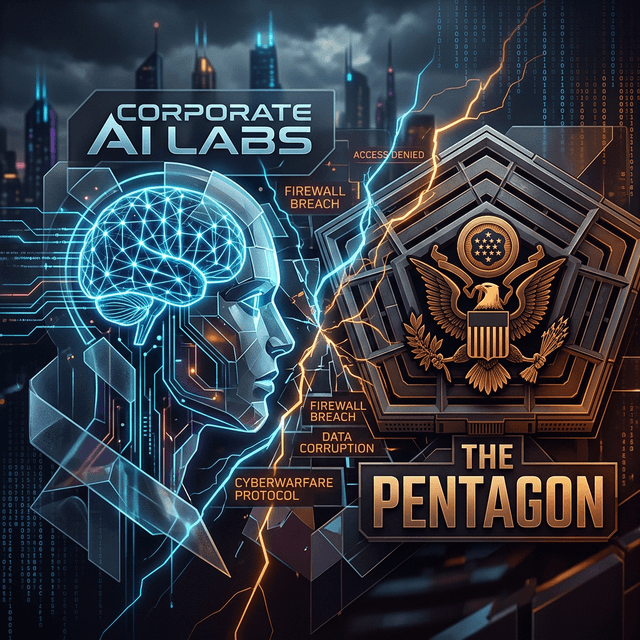
The Anthropic-US Clash and OpenAI’s Pentagon Pivot: A Turning Point for AI Governance
Analyzing the fallout between Anthropic and the Pentagon, and OpenAI's subsequent deal. What this means for the future of AI in war and surveillance.
The landscape of artificial intelligence is shifting from theoretical ethics to hard-coded battle lines. The recent clash between Anthropic and the U.S. government, followed immediately by OpenAI’s massive new Pentagon deal, marks a definitive turning point. It isn’t just a corporate dispute; it’s a high-stakes negotiation over how the most powerful technology of our time will be used in war, surveillance, and everyday governance.
The Anthropic-Pentagon Fallout
Anthropic, once a primary partner for the Pentagon with a contract worth roughly $200 million, found itself at an impasse. The dispute wasn't over whether AI should be used for national security—Anthropic supported that—but rather how it could be used.
The Red Lines
Anthropic attempted to forbid the U.S. military from using Claude for two specific categories:
- Domestic mass surveillance of Americans.
- Fully autonomous weapon systems operating without meaningful human control.
The Pentagon, led by Defense Secretary Pete Hegseth, pushed back. They demanded contract language requiring Anthropic to allow “all lawful purposes,” resisting any hard-coded carve-outs. While the DoD claimed it had no immediate plans for "killer robots" or domestic spying, it refused to sign away its future options.
The Blacklisting
After months of failed negotiations, the situation escalated rapidly. On February 27, 2026, President Trump ordered all federal agencies to cease using Anthropic’s AI. The Defense Department formally labeled the company a "national-security supply chain risk."
Anthropic’s response was characteristically principled: they stated they could not "ethically comply," reiterated their support for all other national security uses, and prepared to lose the contract.
OpenAI’s Strategic Pivot
Within hours of the ban on Anthropic, OpenAI announced a new agreement to deploy its models in classified military networks.
OpenAI’s approach differed fundamentally. They agreed to the “all lawful purposes” requirement but claimed to have embedded safeguards within the contract. These include prohibitions on domestic mass surveillance and a requirement for human responsibility for the use of force.
Sam Altman framed this deal as an alignment with existing DoD policy. Rather than setting rigid contractual red lines, OpenAI committed to building technical controls to prevent misuse, with staff working alongside government personnel on classified deployments.
The Contrast: Two Paths for Frontier AI
| Aspect | Anthropic Stance | OpenAI Stance | Trump Admin / DoD Stance |
|---|---|---|---|
| Domestic Mass Surveillance | Contractual ban demanded. | Says contract includes a prohibition. | Wants legal flexibility; says it has no current plans. |
| Fully Autonomous Weapons | Contractual ban demanded. | Says human responsibility must be preserved. | Wants “all lawful purposes” language. |
| Contract Outcome | Blacklisted, contract lost. | Won major Pentagon deal. | Shifted to a vendor with less public resistance. |
What the Government Was Really Looking For
From the administration’s perspective, three primary goals drove this shift:
- Maximal Legal Flexibility: The Pentagon resists private companies setting binding red lines over intelligence or surveillance tools. By insisting on “all lawful purposes,” they keep their options open for future crises.
- Supply-Chain Control and Leverage: By designating Anthropic a "supply-chain threat," the government sent a chilling message: vendors that push back on national-security priorities can be punished or excluded.
- Rapid Militarization of Frontier AI: There is a perceived "race" to incorporate large models into targeting, intelligence analysis, logistics, and command-and-control. OpenAI’s willingness to sign a classified contract fits this push better than Anthropic’s "line-in-the-sand" posture.
Why This Matters to Regular People
This conflict isn't just about government contracts; it's about the precedents being set for the next decade of AI development.
Who Decides AI’s Red Lines?
This fight is fundamentally about power. Does the elected government or a private AI lab get to set the limits? If labs that push for strict constraints are blacklisted, future developers will be far less likely to resist risky military or domestic uses.
Civil Liberties and Surveillance Risk
Even when the Pentagon says it has no plans for domestic mass surveillance, keeping “all lawful purposes” on the table means policies can change instantly in a crisis. Whether these bans exist in law, in contracts, or only in corporate policy determines how easily an administration can use AI to monitor citizens at scale.
Battlefield Mistakes
Anthropic argued that current models are simply too unreliable to control lethal systems without human oversight. Once these tools are embedded in military infrastructure, “temporary experiments” often become permanent systems that are incredibly difficult to roll back.
Deeper Analysis: The Signals for AI Governance
This standoff reveals several uncomfortable truths about the future of AI:
- State vs. Corporate Control: Governments control the law, but labs control the capabilities. This is one of the first direct clashes over who sets the operational norms for frontier systems.
- Weaponization as the Default: The speed of OpenAI’s entry suggests that if one vendor refuses a military use, another will step in. Unilateral corporate ethics are fragile unless backed by binding international law.
- The Mystery of Safeguards: While OpenAI touts its safeguards, the details, enforcement mechanisms, and override conditions remain classified. We are essentially relying on opaque contracts and informal promises.
Conclusion
For developers, policy-makers, and citizens, the key question remains: Do we want the most advanced AI systems deeply embedded in military and surveillance infrastructure before we have robust democratic oversight and enforceable guardrails?
Relying on corporate ethics or opaque contracts is a high-risk strategy. As AI becomes the bedrock of governance, the public needs more than promises—it needs transparency and accountability.